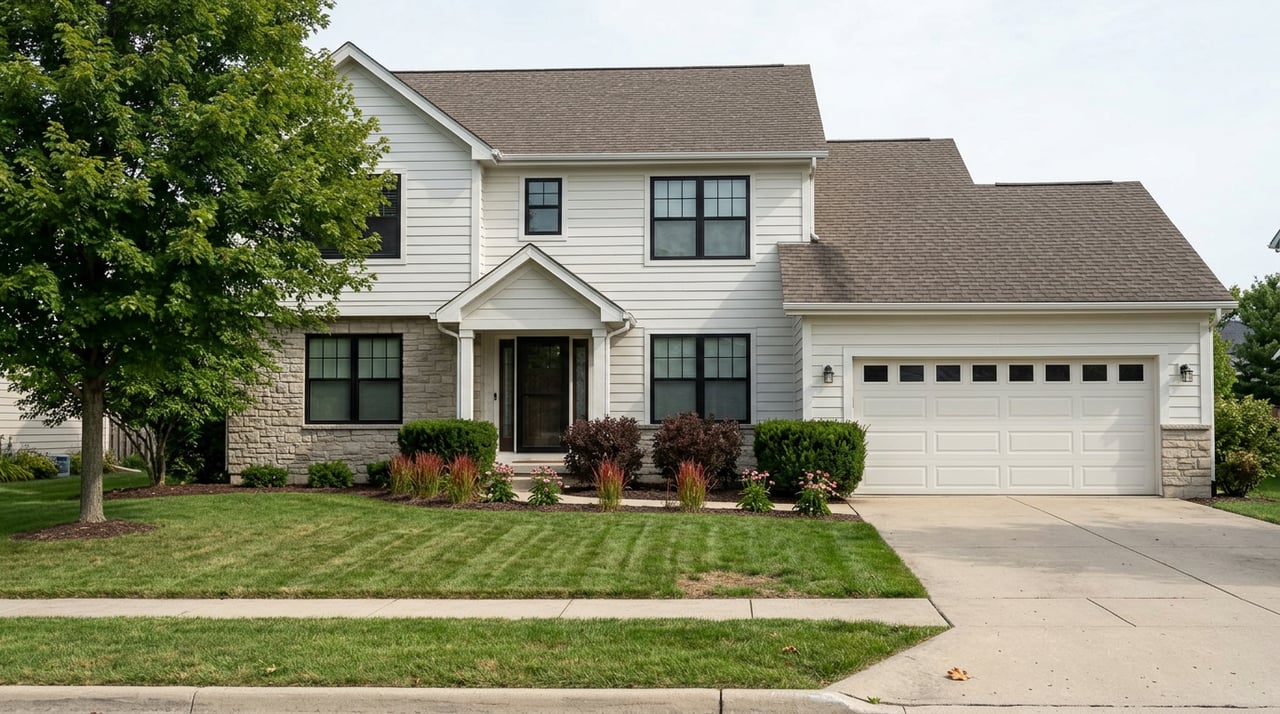
A buyer cross-shopping the south metro this month will notice something odd. Eagan and Burnsville, two Dakota County suburbs that sit less than ten miles apart, are listing homes at almost identical prices. Look past the median, though, and the two markets stop behaving like siblings. The available snapshots show a higher price per square foot in Eagan. Burnsville, meanwhile, has a different mix of housing and continues to add supply. Neither fact shows up on a portal search, and both matter more than the number at the top of the listing.
What the same price tag actually buys
As of August 2026, Eagan's median list price sits at $399,000, working out to about $199 per square foot, with homes spending a median of 30 days on market. Burnsville's median list price is $374,000, or roughly $175 per square foot, with a median of 32 days. On paper, a $25,000 gap in list price looks like the whole story.
It isn't. Sale-level data from earlier this year shows the per-square-foot gap widening once offers actually close. Over the three months ending in May 2026, Eagan homes sold for a median of $380,000, or $198 a square foot, and spent an average of 20 days on market. Burnsville, in a snapshot from February 2026, sold for a median of $372,000, or $183 a square foot, and spent an average of 47 days on market.
| List price (Aug 2026) | Price per sq ft | Days on market | |
|---|---|---|---|
| Eagan | $399,000 | ~$199 | 30 (Aug 2026) / 20 avg (May 2026 sales) |
| Burnsville | $374,000 | ~$175 | 32 (Aug 2026) / 47 avg (Feb 2026 sales) |
The reported price-per-square-foot gaps range from $15 to $24. Something structural is driving the difference.
The ten-minute airport gap behind the price difference
Eagan sits at the literal junction of Interstate 35E and Interstate 494, with Cedar Avenue running north-south through the city. That geometry puts it about five minutes from MSP International Airport, closer than almost any other suburb in the metro, with direct highway routes into both downtowns in well under twenty minutes off-peak.
Burnsville's own economic development page describes its position differently. The city sits at the intersection of I-35W and I-35E, and puts itself at fifteen minutes from MSP International Airport and fifteen minutes from downtown Minneapolis, downtown St. Paul, and the University of Minnesota. Same general region, same interstate system, but a real difference in how close either city sits to the airport and the two downtowns.
That ten-minute gap is not trivial for the kind of buyer this market attracts. Eagan has spent the last several years becoming a genuine corporate landing pad. The Minnesota Vikings moved their headquarters into the 200-plus-acre Viking Lakes development in 2018, and the campus has since added the Omni Viking Lakes Hotel, TCO Stadium, and chef Ann Kim's Kyndred Hearth restaurant on the hotel's ground floor. Thomson Reuters announced it was leasing space at the neighboring Prime Therapeutics headquarters, adding another employer to the corridor. None of that activity sits inside a home's finished square footage, but it is part of the local context for buyers.
Eagan offers a shorter drive to a growing employment corridor, but the available price figures alone don't show how much that proximity matters to buyers.
Two different growth models, and only one of them adds supply
Burnsville has been running a different playbook for two decades. Its 54-acre Heart of the City redevelopment, centered on Nicollet Commons Park and the Ames Performing Arts Center, was built specifically to add new housing stock into an older city rather than trade on scarcity. A regional planning case study notes the district is projected to eventually generate at least 15 times its original tax capacity of $200,000 once fully built out, and the mix of ownership and rental housing has been expanding steadily. As recently as 2024, the Burnsville Planning Commission approved a 172-unit apartment building on Burnsville Parkway, replacing two aging office buildings, with developer Roers Cos. having targeted an 18 to 20 month construction window.
Eagan, by contrast, is a largely built-out city. Housing-age data shows the bulk of its stock dates to the 1970s through the 1990s, with a smaller share, under 19 percent, built in 2000 or later. There is very little vacant land left for new single-family construction. So when a buyer pays Eagan's price per square foot, they are almost always buying a house from the 1970s through the 1990s, not a newer one. That age profile is useful context when comparing the two markets, but it does not by itself explain Eagan's higher price per square foot.
That's the part a median price hides. Two buyers can each spend roughly $380,000 this year and walk into very different transactions. One is buying an older Eagan home in a city with shorter airport travel times and a nearby employment corridor. The other is buying into a Burnsville market that's still absorbing new supply; the available sales snapshots are from different months and don't establish that homes there take longer to sell.
The number that should give buyers pause
Here's where the story gets more interesting than a simple explanation based on location. If Eagan's access advantage were compounding, appreciation should be tracking ahead of comparable metro suburbs. It isn't. Housing-market appreciation data covering the ten years through early 2026 shows Eagan's average annual appreciation rate at 5.11 percent, which trails 80 percent of communities nationally. The most recent quarter on record showed appreciation at negative 0.33 percent, an annualized pace of negative 1.30 percent, even as the trailing twelve months still showed a modest 2.75 percent gain.
Put plainly: Eagan homes sold at a higher price per square foot in these snapshots, but that difference alone doesn't establish a location premium or predict outsized long-term growth. Buyers paying more today shouldn't count on future appreciation outpacing the region.
What this means if you're choosing between the two
For a buyer or seller weighing these two cities, a few practical threads follow from the numbers above.
- A Burnsville listing priced close to an Eagan comp is not necessarily overpriced. It may reflect more square footage, a larger lot, or a different mix of homes and market conditions than those reflected in nearby Eagan comps.
- An Eagan seller had slightly fewer days on market in the August snapshot and higher dollars per square foot in the available figures, but should not assume that translates into stronger appreciation going forward. The data doesn't support that expectation.
- Anyone budgeting past the purchase price should factor in the city's tax levy. Eagan's 2026 budget, adopted late last year, set the general fund at $59.5 million, a 7.9 percent increase over 2025, with the city portion of property taxes on an average Eagan home valued at $426,000 rising roughly $140 for the year. That's a modest number on its own, but it stacks on top of a home with a higher price per square foot in the available figures.
- Buyers drawn to newer construction or a wider range of housing types within walking distance of transit have more of that inventory cycling through Burnsville's Heart of the City than through Eagan, where new single-family supply is essentially closed off.
Neither city is the better buy in the abstract. They're solving for different things, and the median price on a portal search doesn't tell you which one you're actually shopping for.
A few questions worth asking before you tour either city
Does a lower price per square foot mean Burnsville homes are worth less? Not necessarily. It often reflects an older or more varied housing stock competing against newer inventory in the same market, which can widen the time it takes to find the right buyer rather than lower the home's underlying value.
Will Eagan's price premium keep growing? The appreciation data through early 2026 suggests it's held roughly flat over the past decade relative to national and state averages, despite higher per-square-foot figures in the available snapshots. Past performance doesn't guarantee what happens next, but it's a reason to separate "sells fast right now" from "will be worth more later."
Where staging and pricing strategy actually matter here
Numbers like these are exactly why pricing a listing correctly in either city takes more than pulling a median off a portal. A home in Eagan competing on commute time needs to be staged and marketed differently than a home in Burnsville competing on space and value. If you're weighing a move between these two suburbs, or preparing to list in either one, Your Home By Design can walk through what your specific address is actually competing against, not just what the citywide median suggests. Start Your Home By Design with a free market and staging consultation, and get a pricing strategy built around the numbers that apply to your street, not the ones that apply to the whole city.
This article is general information, not legal, tax or financial advice. Consult a qualified professional about your situation.