If you are thinking about a move to Burnsville, you are probably asking a simple question: does it still feel like a great place to live today? In a lot of Twin Cities suburbs, the answer depends on what kind of lifestyle you want, how much space you need, and whether daily convenience actually matches the map. Burnsville stands out because it offers an established suburban setting, a wide range of housing, and a long list of parks, shopping areas, and community events that support everyday life. Let’s dive in.
Burnsville at a glance
Burnsville is a built-out south metro suburb with 64,864 residents across 24.94 square miles, according to the U.S. Census QuickFacts for Burnsville. That matters because it gives the city a more settled feel than a fast-growing edge suburb where development is still catching up to demand.
The city also reflects a broad mix of ages and households. The median age is 36.7, 22.4% of residents are under 18, and the median household income is $87,024, which points to a community with a balanced residential base rather than one narrow lifestyle profile.
Burnsville is also fairly diverse. Census data show 63.1% White alone, 13.5% Black alone, 5.6% Asian alone, and 12.3% Hispanic or Latino, with 14.2% foreign-born residents and 21.5% of households speaking a language other than English at home. In the city’s 2025 Community Survey, residents rated Burnsville highly as a safe, inclusive, welcoming, and enjoyable place to live, and 71% said they would recommend it as a great place to live.
Burnsville feels established
One of the first things you may notice about Burnsville is that it feels mature in the best sense of the word. This is not a place defined by endless new subdivisions or a single master-planned district. Instead, it has established streets, long-standing residential areas, and a civic structure built around local neighborhood identity.
The city highlights neighborhood organizations such as Cedarbridge/River’s Edge, Early Lake, North River Hills, Parkwood South, and South River Hills. That tells you something useful as a buyer or seller: Burnsville is made up of distinct residential pockets, and those neighborhood-level differences can shape everything from housing style to access to parks and commercial areas.
For many buyers, that kind of maturity is a plus. You are more likely to find a mix of lot sizes, home styles, trees, and street patterns than you would in a newer one-note suburb. For sellers, it also means presentation matters, because buyers often compare homes based on condition, updates, and how well a property stands out within an established housing stock.
Housing options are varied
Burnsville offers a wider housing mix than many people expect. According to Census data, the city has a 64.7% owner-occupied housing rate, a median owner-occupied home value of $355,200, median monthly owner costs with a mortgage of $2,034, and a median gross rent of $1,513.
A city housing and commercial needs assessment shows just how broad the inventory is. Burnsville includes single-family homes, townhomes, condominiums, apartments, and cooperatives, which can give you more flexibility whether you are buying your first home, moving up, or looking for lower-maintenance living.
Here is a quick snapshot of the city’s housing mix from that report:
| Housing type | Number of units | Median year built | Estimated value range |
|---|---|---|---|
| Single-family homes | 11,088 | 1976 | $345,500 to $442,625 |
| Townhomes | 4,372 | 1990 | $223,400 to $292,600 |
| Condominiums | 1,275 | 1972 | $111,900 to $208,200 |
| Cooperatives | 347 | 1997 | $133,100 to $208,500 |
This data supports a clear takeaway: Burnsville is not a uniform tract-home market. It is a mature suburb with multiple entry points and home styles, which can be especially helpful if you want choices in layout, maintenance level, and budget.
Home style reflects Burnsville’s age
Burnsville’s development pattern also shapes what homes feel like here. The city report notes that many neighborhoods closer to the Twin Cities were developed between 1960 and 1980, with a median year built of 1976 for single-family homes and 1990 for townhomes.
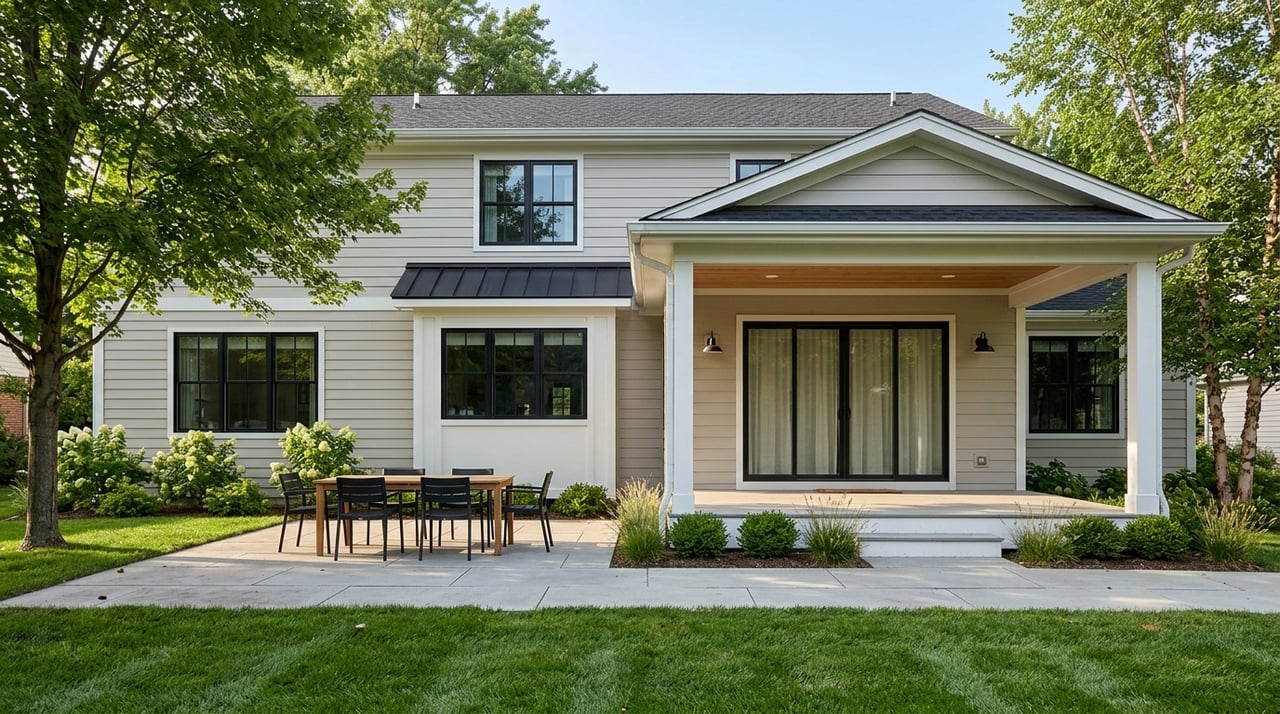
In practical terms, that often means you may see more established landscaping, more variation in floor plans, and homes that can range from updated and move-in ready to properties with renovation potential. For design-minded buyers, that can be a real advantage. A mature home in Burnsville may offer the kind of footprint, yard, or location that is hard to replicate in newer construction.
The same report notes that condos, apartments, and townhomes tend to sit closer to commercially zoned areas and major arterial roads, while single-family homes are generally more offset. If convenience is high on your list, that mix can make it easier to find a location that balances access and privacy.
Parks are a big part of life
If you want a suburb where outdoor access is part of everyday life, Burnsville makes a strong case for itself. The city says it has 76 parks spanning more than 1,750 acres, with about one-third developed for active use and two-thirds preserved as natural areas.
That park system is not just a nice extra. It is one of the clearest lifestyle advantages in Burnsville today. The city also notes that the Black Dog unit of the Minnesota Valley National Wildlife Refuge sits in northeast Burnsville, and part of Murphy Hanrehan Park Reserve is in the southwest corner of the city.
A few parks play an especially visible role in the community. Nicollet Commons Park is a focal point of the Heart of the City and includes a 250-seat amphitheater, open green space, a water feature, and event space. Civic Center Park adds a skate park, Bicentennial Garden, market garden, food forest, amphitheater, and two indoor skating rinks.
The city’s Things to Do page also highlights the depth of recreation available throughout Burnsville, including:
- A 9-hole golf course
- An ice center
- Biking trails
- Cross-country ski trails
- Outdoor ice rinks
- Community gardens
- A dog park
- Disc golf
- An inclusive playground
- Splash pads
For many households, that kind of park and recreation network changes the feel of day-to-day life. It gives you more ways to spend time outdoors close to home, whether you want structured activities or just more room to move.
Shopping and dining are broader than expected
Burnsville has long been known as a shopping destination, but its retail story is changing in useful ways. The city’s Explore Burnsville page says Burnsville is home to a regional mall with 1.2 million square feet and more than 2,200 businesses, which reinforces its role as a commercial hub in the south metro.
At the same time, the city’s Burnsville Center Village Redevelopment vision points to a larger shift. The retail area north and south of County Road 42 is being repositioned as a mixed-use lifestyle complex with pedestrian-friendly retail, recreation, natural spaces, mixed housing, hotels, and eateries. That suggests Burnsville is not only maintaining its commercial base, but also rethinking how those spaces function over time.
Dining is another part of the lifestyle equation. According to Experience Burnsville, the city has more than 40 locally owned establishments, with options that range from coffee and brunch to Vietnamese, Greek/Mediterranean, Indian, Italian, burgers, pizza, and brewpubs.
For you as a resident, that means daily convenience is not limited to chain retail. Burnsville offers a wider mix of local dining and commercial activity than some buyers expect when they first start looking in the south metro.
The Heart of the City adds energy
Burnsville’s Heart of the City gives the community a more defined civic center than many suburbs have. City planning documents place it near the I-35W and TH 13 interchange and describe it as a district with transportation, civic, recreation, shopping, healthcare, employment, education, and faith-based destinations.
That mix matters because it gives Burnsville a stronger central gathering area. Rather than relying only on separate shopping centers and residential pockets, the city has a district designed to bring more activity, events, and public space into one visible hub.
Nicollet Commons Park sits at the center of that experience, and it helps the area feel more active and usable. If you like the idea of suburban living with at least some walkable civic energy, this part of Burnsville is worth paying attention to.
Community events keep it active
A city can have solid amenities on paper and still feel quiet in practice. Burnsville does a good job of avoiding that. The city’s event calendar includes Party on the Plaza, Juneteenth, PRIDE, the Burnsville International Festival, Art and All That Jazz, Burnsville Festival & Fire Muster, Halloween Fest, the Winter Lighting Ceremony, and Polar Fest.
That lineup helps support a stronger sense of rhythm across the year. Instead of only seasonal highs in summer, Burnsville has city-backed events that continue through fall and winter as well.
One especially recognizable tradition is the Winter Lighting Ceremony. The city says the Heart of the City area is lit with more than 100,000 mini lights, 230 streetlight snowflakes, and a 30-foot tree each winter. Events like that help give the city a stronger sense of place.
Who Burnsville may fit best
Burnsville can work for a wide range of buyers and sellers, but it tends to appeal most to people who want an established suburb with practical amenities already in place. You may find it especially appealing if you value:
- A broad range of housing options
- Mature neighborhoods with distinct identities
- Strong park access and outdoor recreation
- Shopping and dining convenience
- A city with an active event calendar
- A location that feels settled rather than rapidly expanding
For buyers, Burnsville can offer good flexibility, especially if you are comparing different home types or looking for a property with long-term update potential. For sellers, the city’s mature housing stock makes thoughtful preparation especially important, because homes often compete on condition, design updates, and presentation.
Final thoughts on living in Burnsville
So, what is it like to live in Burnsville today? The best answer is this: Burnsville feels like a mature, amenity-rich suburb that offers more variety and more daily convenience than many people expect. Between its diverse housing stock, extensive parks system, established neighborhood structure, active community calendar, and evolving retail centers, it offers a lifestyle that is both practical and well-rounded.
If you are considering a move to Burnsville, or preparing to sell a home here, local insight makes a real difference. The right strategy is not just about square footage or price point. It is also about understanding how Burnsville’s neighborhoods, housing age, amenities, and presentation standards shape value. When you are ready for tailored guidance, connect with Shelly Rae Linnell for a personalized market and home strategy conversation.
FAQs
What is the overall lifestyle like in Burnsville, MN?
- Burnsville offers an established suburban lifestyle with a strong parks system, varied housing options, active shopping and dining areas, and year-round community events.
What kinds of homes can you find in Burnsville, MN?
- Burnsville includes single-family homes, townhomes, condominiums, apartments, and cooperatives, with much of the housing stock developed between the 1960s and 1990s.
Are parks and outdoor recreation important in Burnsville, MN?
- Yes. Burnsville has 76 parks covering more than 1,750 acres, along with trails, skating, golf, splash pads, community gardens, and access to nearby natural areas.
Does Burnsville, MN have shopping and dining options?
- Yes. Burnsville has a major regional retail presence, more than 2,200 businesses, and more than 40 locally owned dining establishments listed by the city’s tourism resource.
Is Burnsville, MN a good fit if you want an established suburb?
- Burnsville may appeal to you if you want a mature suburb with developed neighborhoods, everyday amenities, and a housing market that offers more variety than many newer communities.